

Which Olive Oil Is Best for Cooking? A Practical, Science-Backed Guide
Quick answer
For most everyday cooking, a good extra-virgin olive oil (EVOO) is the best choice for low-to-medium heat and for adding flavor use refined / light olive oil when you need a higher smoke point and a neutral taste (e.g., deep-frying or very high-heat searing).
Introduction
“Can I cook with extra-virgin olive oil?” is one of the most common kitchen questions. The short myth: EVOO is too delicate for heat. The reality: the decision depends on heat level, flavor goals, and how you store and use the oil. This guide explains the types of olive oil, smoke points vs. heat stability, real cooking recommendations (by method and temperature), health trade-offs, and smart shopping and storage tips all backed by recent research and culinary guidance.
What are the main types of olive oil?
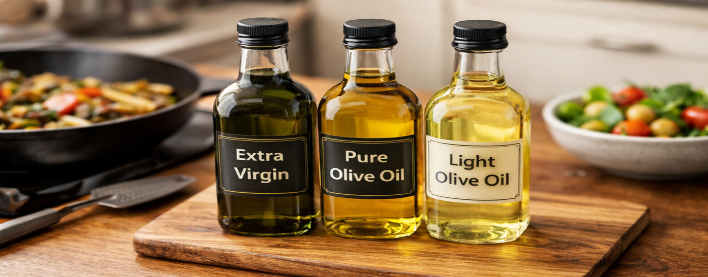
Extra-Virgin Olive Oil (EVOO): cold-pressed, minimally processed, strong aroma and flavor, highest polyphenol (antioxidant) content. Best for dressings, finishing, and low-to-medium heat cooking.
Virgin / Pure Olive Oil: single-pressed or blended; milder flavor and slightly more processing than EVOO. Good for everyday cooking.
Refined / Light Olive Oil: refined to remove flavor and impurities; much milder taste and usually a higher smoke point. (“Light” refers to flavor, not calories.)
A high-quality EVOO will deliver the most flavor and many health benefits, while refined olive oil trades some of those for a higher tolerance to heat and a neutral taste.
Smoke point vs. thermal stability, what really matters
Smoke point is the temperature at which an oil visibly smokes and begins to break down. Typical smoke point ranges for olive oils are variable: EVOO commonly falls roughly between 350–410°F (177–210°C) depending on quality and free fatty acid content, while refined olive oils can be higher. But smoke point alone isn’t the whole story.
Thermal (oxidative) stability depends on fatty acid profile (monounsaturated fats are more heat-stable than polyunsaturated fats) and minor compounds like polyphenols and tocopherols that protect the oil from oxidation. High-quality EVOO tends to retain stability in typical cooking because those antioxidants slow harmful breakdown, meaning EVOO often performs better under heat than its nominal smoke point would suggest. In short: stability + actual cooking temperature matters more than a single smoke-point number on the label.
Which olive oil to use by cooking method
-
Cold uses / finishing / dressings: Extra-virgin olive oil for flavor and maximum antioxidants.
-
Low-heat cooking (simmering, gentle sauté, soft scrambling): EVOO preserves flavor and many healthful compounds.
-
Medium-high heat (regular sautéing, oven roasting up to ~400°F / 200°C): High-quality EVOO or virgin/pure olive oil use EVOO if you want the olive flavor; use pure/regualr if you want less taste.
-
High heat (deep-frying, very high searing above ~400°F / 204°C, repeated heating): Refined / light olive oil or other high smoke-point oils (refined avocado, high-oleic sunflower) are better choices for heat tolerance and neutral taste.
Practical temperature map (approximate):
-
Low heat: up to 300°F / 150°C EVOO ideal.
-
Medium heat: 300–375°F / 150–190°C EVOO or virgin/pure OK.
-
High heat: 375–450°F / 190–232°C refined/light olive oil or alternative high-smoke oils preferred.
Health & nutrition: does heat destroy EVOO’s benefits?
Heating reduces some polyphenols (antioxidants) in EVOO, and the amount lost increases with temperature and time. However, studies show a significant portion of EVOO’s beneficial compounds remain after normal cooking and that EVOO’s fatty acid structure (mostly monounsaturated fats) and remaining antioxidants help protect cooked food and limit harmful oxidation compared with many polyunsaturated-rich oils. In many Mediterranean cuisines EVOO is the primary cooking fat and long-term population studies associate these diets with heart benefits. The net takeaway: using EVOO in cooking is healthful when used appropriately; avoid overheating until it smokes.
Flavor & pairing when to prioritize taste
EVOO is prized for grassy, fruity, peppery or bitter flavor notes these can enhance salads, crusts, finishing drizzles, dips, and gentle sautees. For baking or recipes where you want a neutral fat (e.g., some pastries, delicate stir-fries), choose refined / light olive oil or a neutral high-heat oil so the olive flavor doesn’t dominate.
Tasting tip: peppery finish and pleasant bitterness indicate fresher, polyphenol-rich EVOO a positive sign.
Shopping & storage: how to buy a bottle that stays good
-
Look for “extra-virgin” and, if present, a harvest date or “best by” (freshness matters).
-
Prefer dark glass bottles (or tins) to protect against light; avoid clear plastic or clear glass.
-
Regional/quality seals (PDO/PGI or reputable national certification) can help identify trustworthy producers.
-
Store in a cool, dark place away from heat and light; use within a few months after opening for the best flavor.
-
Price & value: mid-priced EVOOs often offer the best balance of flavor and genuine quality; extremely cheap bottles can be lower grade or blended with other oils.
Quick recommendations for common kitchen tasks
-
Pan-sautéed vegetables: EVOO for flavor; preheat pan moderately.
-
Pan-seared steak (very hot pan): refined/light olive oil or a high-smoke neutral oil for initial sear; finish with a splash of EVOO.
-
Roasting root vegetables (375–425°F / 190–220°C): EVOO works well; use refined if roasting at the upper temperature and you want a neutral flavor.
-
Deep-frying: refined/light olive oil will tolerate higher temps; many choose less expensive high-smoke oils for cost reasons.
Safety note: avoid overheating and reusing oil excessively
Any oil heated past visible smoking is undergoing degradation; burnt oil tastes awful and can contain undesirable compounds. Reusing oil multiple times (especially for deep frying) accelerates breakdown discard when it darkens, foams, or smells off.
FAQ
Q: Can I cook with extra-virgin olive oil?
A: Yes, EVOO is safe and often stable for low-to-medium heat cooking and adds flavor and beneficial antioxidants. Avoid heating it until it smokes.
Q: Is light olive oil healthier than extra virgin for cooking?
A: “Light” olive oil is more refined and has a higher smoke point but fewer antioxidants and less flavor than EVOO. Healthwise, EVOO offers more cardio-protective polyphenols, so choose based on cooking method and flavor needs.
Q: What is the smoke point of extra-virgin olive oil?
A: It varies with quality and freshness but typically ranges roughly between 350–410°F (177–210°C). Use these numbers as guides, not absolutes.
Q: Which oil should I use for deep frying?
A: For repeated deep-frying or very high temps, many cooks choose refined / light olive oil or other high-smoke oils (refined avocado, high-oleic sunflower) for heat tolerance and neutral taste.
Q: How should I store olive oil?
A: Keep in a cool, dark place in a dark glass bottle or tin and use within a few months of opening for best flavor. Avoid heat and direct sunlight.
Conclusion
-
Use EVOO for salads, finishing, dressings, and low-to-medium heat cooking to enjoy flavor and health benefits.
-
Use refined / light olive oil when you need a neutral taste and higher smoke point for very high heat cooking.
-
Avoid heating any oil to visible smoke; store oils carefully and replace when off-smelling or degraded.
Follow those rules and you’ll get the best of flavor, nutrition, and kitchen performance from olive oil.